
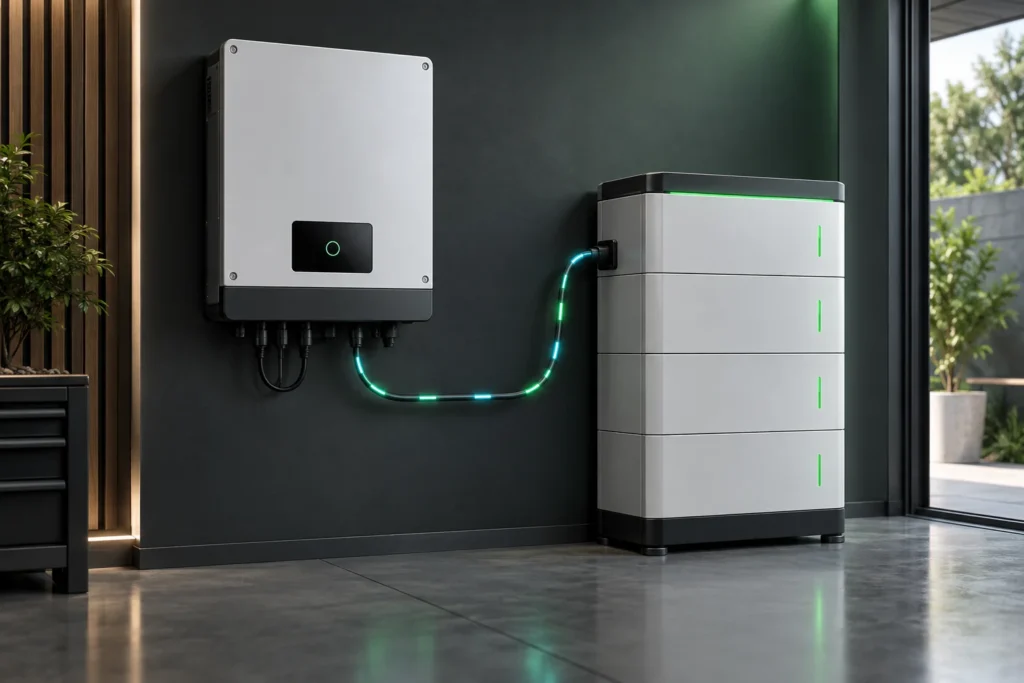
Does a CAN or RS485 Port Guarantee Battery Compatibility With a Hybrid Inverter?
A CAN or RS485 port alone does not guarantee battery compatibility. Learn the six electrical, protocol, firmware and wiring checks req…
Read guideThe inverter knowledge hub
Find your way from a project idea to a practical inverter shortlist. Explore selection guides, understand the key specifications, and prepare the details that make a technical review useful.
Browse by question
These resources link directly to the published product, technology and application information on this website.
Review the documented range by rated output, phase arrangement and battery platform before opening the full model details.
Browse the product range 02 / Electrical serviceUnderstand why the site's AC supply and per-phase loads come before the choice of inverter power or parallel configuration.
Read the phase overview 03 / Battery platformSee how nominal battery voltage relates to the current range, with model data and checks for battery-side current and protection.
Explore low-voltage options 04 / Solar inputSeparate maximum open-circuit voltage, MPPT operating range, input current and permitted array power when planning strings.
Review the MPPT checks 05 / CompatibilityA matching nominal voltage or a CAN / RS485 port is not enough. Check electrical limits, protocol, firmware and communication wiring.
Read compatibility guidance 06 / Backup planningDistinguish running power from starting loads, and inverter output from battery capacity, before deciding what should remain powered.
Explore backup planningLatest expert guidance
A CAN or RS485 port alone does not guarantee battery compatibility. Learn the six electrical, protocol, firmware and wiring checks req…
Read guideA practical selection guide
Use this sequence to build a shortlist for a new installation. It helps reveal missing information before price or power becomes the only deciding factor.
Get help with model selectionPlanning guidance only. Final design, installation and approval must follow the exact model documentation and local requirements.
Record country, nominal voltage, frequency, phase arrangement and any export restrictions. A region label alone does not establish grid compatibility.
Separate solar self-consumption from backup requirements. List simultaneous running loads, the largest starting load and any sensitive equipment.
Review panel and string data, battery voltage range, charge/discharge limits and BMS protocol. Confirm backup duration using usable energy, not just nameplate capacity.
Check operating modes, installation environment, protection requirements, parallel options and market-specific compliance evidence. Do not carry specifications from one model to another.
Prepare a useful inquiry
You do not need every answer to get started. Identify what is known and what still needs confirmation.
Have drawings or equipment specifications? Use the contact form for your project summary; email supporting files to info@solarstoragehub.com.
Prepare a technical inquiryRead specifications with confidence
Similar-looking figures often describe different parts of the system. Always check the units and the operating conditions.
Common resource questions
Open the product range and select the model detail page. For installation, commissioning or procurement, request the current datasheet and installation manual for that exact model and revision. Website summaries are a starting point, not a substitute for those documents.
These are different electrical platforms; confirm the exact model before comparing voltage, phase and current values.
Yes. Use the contact form and include the full model number, installation country and the document you need. This helps the team confirm the relevant version; document availability should be checked for the exact product.
Request model documentationProvide its brand, exact model, datasheet, BMS protocol and firmware information if available, together with the intended inverter model. Include voltage limits and continuous charge/discharge limits. Matching nominal voltage alone does not confirm compatibility.
No. They explain typical planning considerations. Final component selection, wiring, protection and operating settings need a project-specific review by a qualified installer using current product documentation and local rules.
Put the information to work
Share the project context and the information you already have. We can help identify the selection questions and model documents to review next.
With your permission, we use Google Analytics to understand page visits and inquiry-button use. We do not send your form answers to analytics. You can change your choice using Analytics preferences in the footer. Privacy policy